AI Spa Design — Redesign Your Spa From a Photo
Wondering how to redesign your spa? RoomGPT shows you exactly what's possible — before you spend a cent on furniture or a designer.


Free on iOS & Android
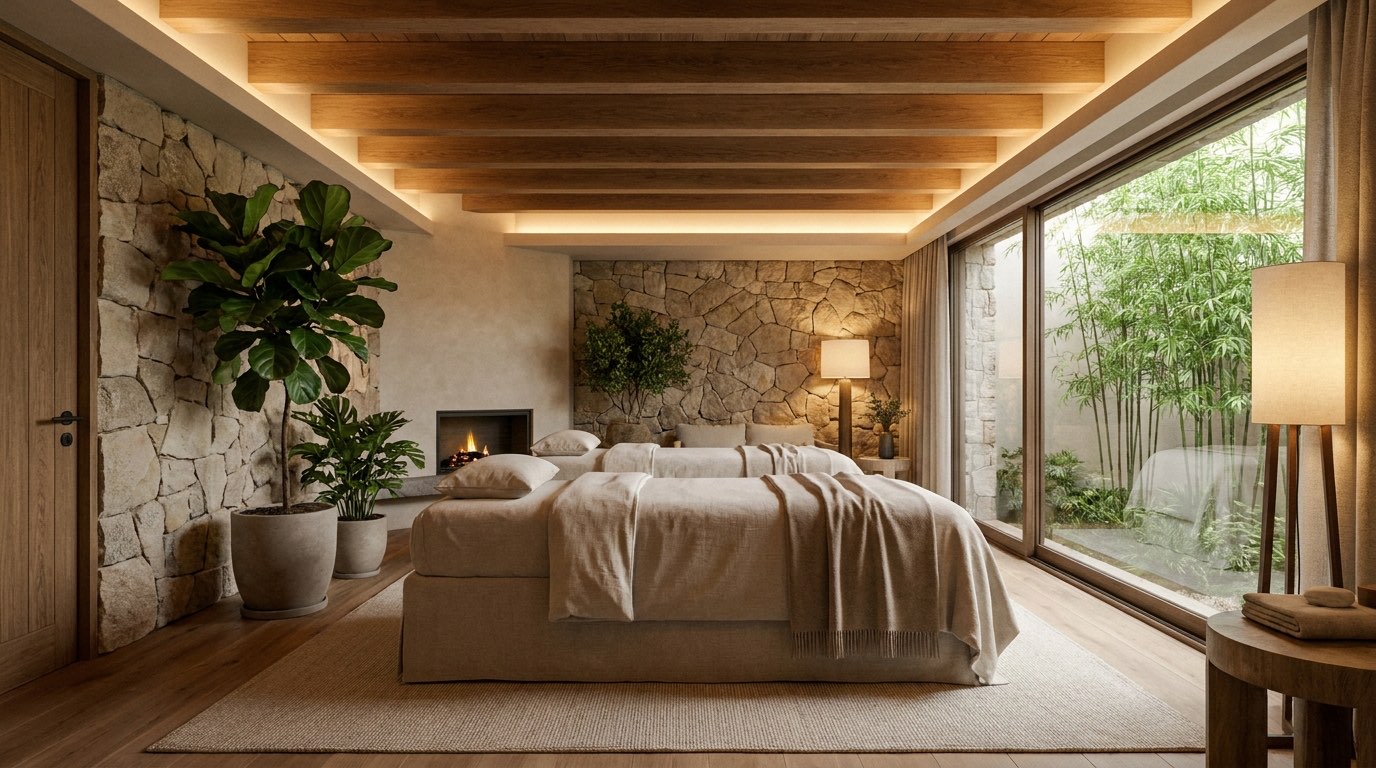
A great spa design lives or dies on atmosphere, and atmosphere comes from restraint. The best home spas trade busy patterns for a tight, low-contrast palette — warm greige walls, honed limestone or large-format porcelain in soft taupe, and natural teak or accoya wood that shrugs off humidity. Keep three materials, not seven. RoomGPT lets you photograph your bathroom, basement corner, or sunroom and instantly see it reimagined with a freestanding soaking tub, a teak slat bench, and a pebble-mosaic shower floor that reads like a Japanese onsen.
Lighting is the quiet hero. Spas use layers at low height: a 2700K wall wash, a dimmable cove behind a floating vanity, and a single sculptural pendant over the tub — never a glaring overhead grid. Pair that with biophilic touches (a snake plant, a slab of live-edge wood, a glimpse of greenery) and a clear circulation path so the space feels calm to move through. The point is sensory order: warm underfoot, soft to the eye, quiet to the ear.
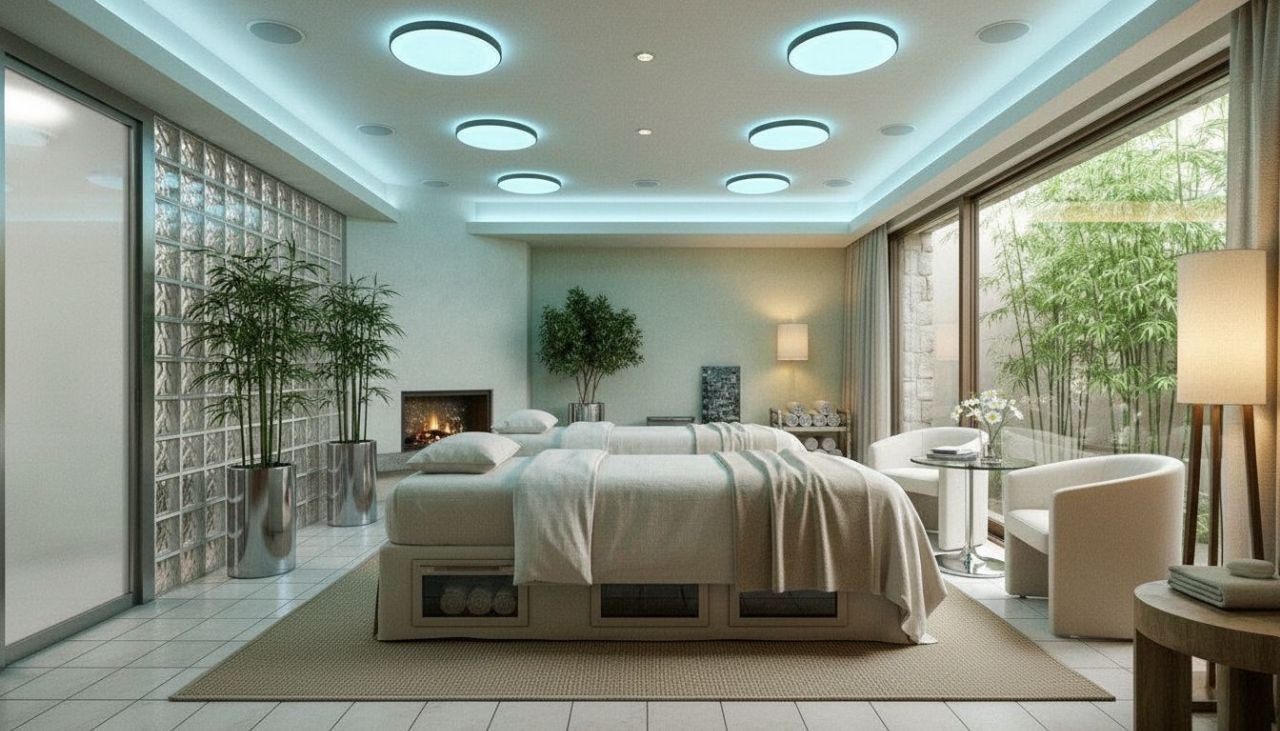
Try several directions side by side — a minimalist Scandinavian sauna look, a moody dark-stone hammam, or a bright coastal wet room — then commit to the one that lowers your shoulders the moment you see it.
Design tips for your spa
- Anchor the room with a freestanding soaking tub set away from the wall, leaving 24-30 inches of clearance so it reads as a sculptural centerpiece, not plumbing.
- Stick to a three-material palette: honed stone or large-format porcelain, warm teak or accoya wood, and a single matte-black or brushed-brass metal for fixtures.
- Light at low color temperatures (2700K) in layers — cove lighting, a dimmable wall wash, and one pendant — and put everything on a dimmer to set the mood.
- Add a wet zone with a curbless walk-in shower, a pebble-mosaic floor for foot massage, and a built-in teak slat bench at 17-19 inches high.
- Use biophilic accents that tolerate humidity — snake plants, ferns, eucalyptus bundles — and a live-edge wood shelf to soften the hard surfaces.
- Hide clutter completely: recessed niches for towels and oils, a closed floating vanity, and concealed storage keep the spa visually silent and calm.
See your spa in 100+ styles
Tap any style to explore spa ideas, or open the app to apply it to your own photo.


Explore other rooms
Frequently asked questions
How does AI spa design work?
Take or upload a photo of the room you want to convert, choose a style, and RoomGPT's AI redesigns that exact space as a spa in seconds. You can try a sauna, hammam, or coastal wet-room look on the same photo in the free RoomGPT app.
Can I turn a regular bathroom or spare room into a home spa?
Yes. Because RoomGPT works from your own photo, it reimagines your real bathroom, basement nook, or sunroom with spa elements like a soaking tub, teak bench, and stone walls — keeping your room's actual shape and windows.
What colors and materials work best for a spa?
Calm, low-contrast palettes win: warm greiges and taupes, honed stone or porcelain, and humidity-friendly teak. Keep it to three materials. You can preview these combinations on your own room in the RoomGPT app before buying anything.
Is RoomGPT free to try?
Yes. Download RoomGPT free on iOS or Android and generate your first spa redesigns on us — no credit card required.
Can I use the spa redesigns to actually renovate?
Absolutely. People use RoomGPT to lock in a direction, align with family or a partner, and brief a contractor or tile shop with a clear visual target before any demolition starts.